The Soul of Japanese Lyricism and the King of “Daily Life” Rap.
【Introduction】Beyond the Lyrics : Why MC Battle Culture Dominates Japan
While Global Hip Hop (especially in the US) has shifted toward the “Type Beat” era—where the vibe, mood, and production style drive the charts—Japan has carved out a distinct path rooted in lyrical complexity and competitive sport.
Lyrical Depth vs. Global Vibe
In the West, many listeners prioritize the “flow” and the overall sonic texture of a track. In contrast, Japanese fans treat lyrics like literature.
Differences in search trends
While global fans search for “Type Beats,” Japanese listeners are searching for “Rhyme aesthetics” and “Punchline meanings.” * The Philosophy: There is a deep respect for “relevance” (文脈 – Bunmyaku)—the historical and personal weight behind a rapper’s words.
The MC Battle Phenomenon
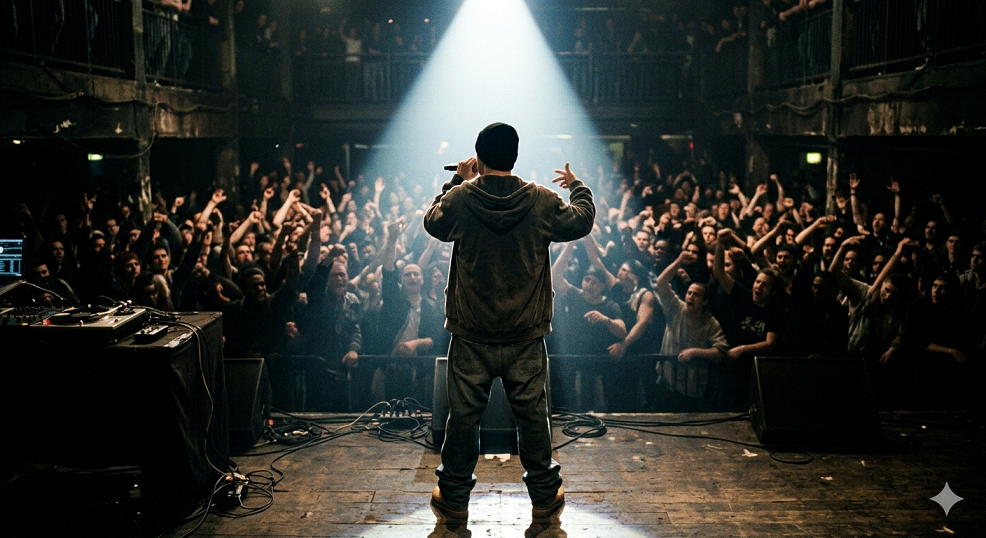
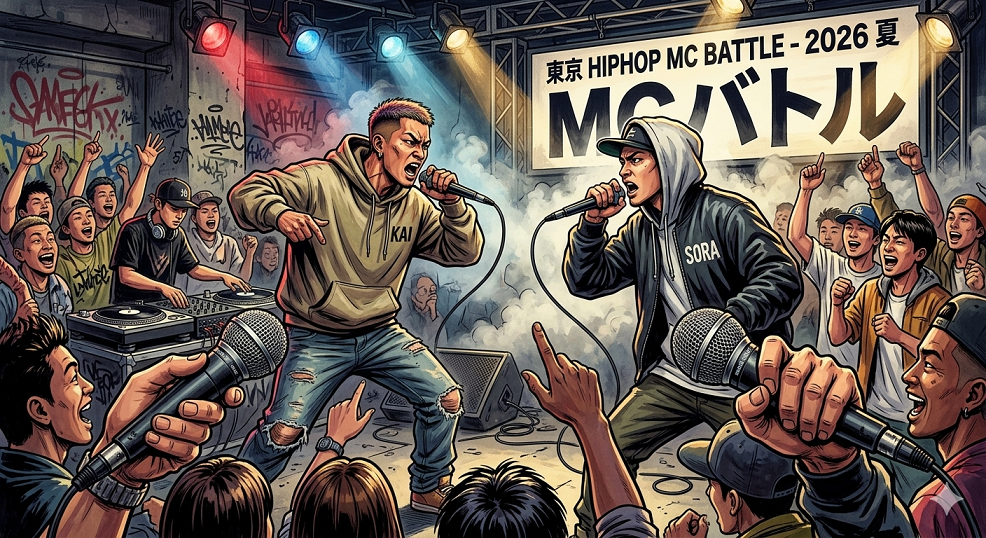
The most striking difference is the massive popularity of MC Battles. In Japan, these are not just underground events; they are major spectacles filling arenas like the Nippon Budokan.
Sport-like Consumption
Japanese fans consume battles like a professional sport. The technicality of rhymes, the speed of the comeback, and the “storyline” between rivals drive millions of views on YouTube.
What are the major MC battle tournaments in Japan?
Organizations like Sengoku (戦極) and Gaisen (凱旋) have turned freestyle rapping into a national pastime, bridging the gap between hardcore hip hop and mainstream entertainment.
Having gained experience in such MC battles, “ZORN” is a popular figure in the Japanese hip-hop scene.
About “ZORN” ~Japanese Hiphop Artist~
In the ever-evolving world of Japanese Hip-Hop (J-Hip Hop), one name stands as the ultimate symbol of authenticity and lyrical craftsmanship: ZORN.
Emerging from the gritty streets of Katsushika, Tokyo, ZORN has redefined what it means to be a “real” rapper in Japan.
He doesn’t rap about luxury cars or jewelry; instead, he finds the sublime in the mundane—parenting, hard work, and the complex bonds of family.
ZORN / Walk This Way feat.AKLO
The Collaboration: ZORN x BACHLOGIC
Much like the legendary duo Nas and DJ Premier or the modern chemistry of Nas and Hit-Boy, ZORN’s career reached its zenith through his partnership with the mastermind producer BACHLOGIC (BL).
Together, they create a “brand of sound” that is both cinematically grand and intimately raw.
BACHLOGIC’s soul-stirring, piano-driven beats provide the perfect canvas for ZORN’s dense, multi-syllabic rhyme schemes.
ZORN / Rep feat. MACCHO Produced by BACHLOGIC
AKLO – NEW DAYS MOVE Produced by BACHLOGIC
Why ZORN is a Global Standout
The Poetry of the Ordinary: ZORN is famous for his ability to rhyme about everyday Japanese life—taking the trash out, working on a construction site, or changing diapers—and turning it into a high-stakes drama.
His most iconic philosophy, “Even hanging out the laundry is HIPHOP,” perfectly captures his stance: that true Hip-Hop isn’t found in flashy lifestyles, but in the pride and grit of daily responsibilities.
ZORN’s exceptional rap skills
His rhyming technique is among the best in the world. His flow is tight, and his ability to maintain complex internal rhymes while telling a coherent, emotional story is unparalleled.
From “Bad Son” to “Best Dad”
His discography, especially the masterpiece “Katei no Jijou” (Family Affairs), chronicles his transformation from a troubled youth with a criminal record to a devoted father. His lyrics bridge the gap between “the streets” and “the home.”
Essential Tracks for New Listeners
“Family Affairs” (家庭の事情): A tear-jerking epic about reconciliation with his parents and his own dark past.
“My Life”: The anthem that declared his lifestyle: “Laundry, washing dishes, and taking out the trash—that’s my life.”
“One Mic” feat. KREVA : A high-level lyrical exchange over a haunting BACHLOGIC production.
If you are looking for the heart of Modern Japanese Rap, ZORN is the artist to follow.
Experience the “Rhyme Aesthetics” of ZORN and see why he sold out the legendary Yokohama Arena and Nippon Budokan.
The lyrics to the song “Family Affairs” (家庭の事情)
Here’s a song ZORN released for Mother’s Day.
TITLE:Family Affairs (家庭の事情:ka-te-i-no-ji-jyo-u)
English Interpretation ※Content Focused on Rhyming
(The text in parentheses is in Japanese)
【The text in bold is an explanation】
[Verse 1]
Early days of life, starting at the bottom
(人生の最初の方/zi-n-sei-no-sai-sho-no-ho-u)
Kitchen sink full of dishes, cold and rotten
(洗い物の溜まった台所/a-rai-mo-no-no-ta-ma-tta-dai-do-ko-ro)
Mama reached for a knife to take Daddy’s life
(ママがパパのこと刺し殺そうとしても/ma-ma-ga-pa-pa-no-ko-to-sa-shi-ko-ro-so-u-to-shi-te-mo)
A kid can’t choose his parents, caught in the strife
(親は選べない子供/o-ya-wa-e-ra-be-nai-ko-domo)
【A term that came into use in Japan around 2021, meaning “parent capsule toy machine(Gachapon).” It implies that you cannot choose your parents.】
Convenience store BENTO, the taste of my home
(コンビニ弁当がお袋の味/ kon-bi-ni-ben-tou-ga-o-fu-ku-ro-no-a-zi)
Wearing the same old clothes, wherever I roam
(いつも着てる洋服も同じ/ i-tsu-mo-ki-te-ru-you-fu-ku-mo-o-na-zi)
Found a syringe in my kindergarten bag
(幼稚園のカバンから注射器/ you-chi-en-no-ka-ban-ka-ra-chuu-sha-ki)
My house was Rated R, a red flag to drag
(家の中が18禁/ i-e-no-na-ka-ga-juu-ha-cci-ki-n)
【It’s clear from the previous paragraph that the parents were neglectful.】
But still, I felt love in the middle of the mess
(だけど受けた愛情/ da-ke-do-u-ke-ta-ai-jou)
Grandma came over, relieved all my stress
(夜はちゃあちゃんが来れば大丈夫/ yo-ru-wa-cha-a-chan-ga-ku-re-ba-dai-jou-bu)
A world so different from my friends next door
(友達の家とはズレた環境/ to-mo-da-chi-no-i-e-to-wa-zu-re-ta-kan-kyou)
Can’t remember, but can’t forget anymore
(覚えてねーし忘れらんないよ/ o-bo-e-te-ne-e-shi-wa-su-re-ran-nai-yo)
【A past I want to forget but can’t… The contradictory statement, “I don’t remember it, but I can’t forget it,” really hits home.】
Eating rice and raw eggs with my little brother
(弟とご飯にたまごかけた/ o-tou-to-to-go-han-ni-ta-ma-go-ka-ke-ta)
Dreaming of a family, loving each other
(一家団らんに憧れた/ i-kka-dan-ran-ni-a-ko-ga-re-ta)
People would be speechless, eyes wide in fear
(人が聞いたら唖然としそう/ hi-to-ga-ki-i-ta-ra-a-zen-to-shi-sou)
At the family affairs that nobody should hear
(誰にも言えない家庭の事情/ da-re-ni-mo-i-e-nai-ka-tei-no-zi-jou)
【It really conveys how the everyday scenes in many households were “special.”】
[Hook]
“Shut the hell up, just leave me alone, you bitch”
(うるせー黙れ ほっといてくれよクソババア/ u-ru-se-e-da-ma-re-ho-tto-i-te-ku-re-yo-ku-so-ba-ba-a)
I was the son who never brought a flower home, not a stitch
(花の一つも渡せない息子だった/ ha-na-no-hi-to-tsu-mo-wa-ta-se-nai-mu-su-ko-da-tta)
But now I feel it, yeah, even if it’s too late
(でも今なら そう / いや今さら そう/ de-mo-i-ma-na-ra-sou/i-ya-i-ma-sa-ra-sou)
Dedicated to the losers, this song is my fate
(曲を贈ろう ろくでもないクズの賛歌/ kyo-ku-o-o-ku-rou-ro-ku-de-mo-nai-ku-zu-no-san-ka)
【A scene that offers a glimpse of the regret felt by someone who, having grown from an emotionally turbulent adolescence into a parent who now understands those feelings a little better, thinks, “I wish I’d done things differently.”
But even as they say, “Maybe I could do it now,” or “It’s too late now…,” their embarrassment is clearly evident in the gift they chose the day before Mother’s Day: Ode to a Loser.】
[Verse 2]
Dad walked out when I hit my teens
(親父が出てった思春期/ o-ya-zi-ga-de-te-tta-shi-shun-ki)
Woke up to some host sleeping in my house, it seems
(知らねーホストが寝てた自分ち/ shi-ra-ne-e-ho-su-to-ga-ne-te-ta-zi-bun-chi)
“I wish I never birthed you,” she screamed in my face
(あんたなんか産まなきゃよかった/ an-ta-nan-ka-u-ma-na-kya-yo-ka-tta)
“I wish I wasn’t born in this goddamn place”
(こんな家生まれなきゃよかった/ kon-na-i-e-u-ma-re-na-kya-yo-ka-tta)
【He felt like he didn’t belong at home. That was because of his parents’ situation.】
Screaming and preaching, man, shut your mouth
(説教も発狂もうっせーよ/ se-kkyou-mo-ha-kkyou-mo-u-sse-e-yo)
Found peace in the bass when the speakers went south
(安らぎは爆音の重低音/ ya-su-ra-gi-wa-ba-ku-on-no-juu-tei-on)
Every night a crime, three arrests on my name
(毎夜犯罪 逮捕三回/ mai-yo-han-zai-tai-ho-san-kai)
Scattered pills and the wreckage of love’s game
(転がる錠剤と愛の残骸/ ko-ro-ga-ru-jou-zai-to-ai-no-zan-gai)
【It’s that feeling of blasting your favorite songs at full volume to keep your cool when you don’t know where to vent your emotions. 】
Jail cells, reform school, life in the cage
(留置所 鑑別 少年院/ ryuu-chi-jo-kan-be-tsu-shou-nen-in)
Family court regular, at a young age
(家庭裁判所も常連に/ ka-tei-sai-ban-sho-mo-jou-ren-ni)
“This is what will lead him,” the lawyer brought in
(これがこの子を導くと/ ko-re-ga-ko-no-ko-o-mi-chi-bi-ku-to)
The lyric notebook I wrote from within
(弁護士が持ってきたリリック帳/ ben-go-shi-ga-mo-tte-ki-ta-ri-ri-kku-chou)
【Did the lawyer who handed over the lyric book have foresight?】
Bread and hot water behind the iron bars
(鉄格子の中で白湯にパン/ te-tto-gou-shi-no-na-ka-de-sa-yu-ni-pan)
An acrylic plate between us, hiding our scars
(親子の間のアクリル板/ o-ya-ko-no-ai-da-no-a-ku-ri-ru-ban)
Is this song defamation? Or a cry of the soul?
(こんな曲は名誉毀損?/ kon-na-kyo-ku-wa-mei-yo-ki-son)
The family affairs that I hated as a whole
(死ぬほど憎んだ家庭の事情/ shi-nu-ho-do-ni-kun-da-ka-tei-no-zi-jou)
【Visits through a plexiglass partition and the significance of the plexiglass panels as a measure against droplet transmission during the COVID-19 pandemic. A sense of being physically close yet emotionally distant. While in juvenile detention, he reflected on his past and “hated to death” the circumstances of the family into which he was born.】
[Hook]
(Repeat)
[Verse 3]
I reflect, they reflect, we all see the light
(俺も反省 親も反省/ o-re-mo-han-sei-o-ya-mo-han-sei)
Rebuilding the broken, making it right
(壊れた家庭 一緒に再生/ ko-wa-re-ta-ka-tei-i-ssho-ni-sai-sei)
Now I can love every part of my past
(今ならどんな過去も愛せる/ i-ma-na-ra-don-na-ka-ko-mo-ai-se-ru)
Grandkids in their arms, back together at last
(復縁した二人 孫を抱いてる/ fu-ku-en-shi-ta-fu-ta-ri-ma-go-o-dai-te-ru)
【As time passed, both parties were able to forgive one another. The lyrics paint a picture of ZORN becoming a parent and fulfilling his filial duties.】
Sorry for the tears that I made you shed
(枯れるくらいに泣かせてごめん/ ka-re-ru-ku-rai-ni-na-ka-se-te-go-men)
Sorry for the bowing and the shamed words said
(そこら中 頭下げさせてごめん/ so-ko-ra-juu-a-ta-ma-sa-ge-sa-se-te-go-men)
How did it feel when you came to visit your son?
(息子の面会ってどんな気持ち?/ mu-su-ko-no-men-kai-tte-don-na-ki-mo-chi)
What was on your mind when the visit was done?
(その帰り道はどんな気持ち/ so-no-ka-e-ri-mi-chi-wa-don-na-ki-mo-chi)
【Now that ZORN has become a parent himself, he must have had moments when he felt the need to apologize. Seeing him do that, I wonder what my own parents must have felt when I was a child?】
In the end, it’s on me, I take the blame
(結局自分のせい/ ke-kkyoku-zi-bun-no-sei)
Parents ain’t perfect, just humans in the game
(親だって完璧じゃない人間/ o-ya-da-tte-kan-pe-ki-ja-nai-nin-gen)
No more grudges, “Thank you” is what I wanna say
(恨んじゃない ありがとうが言いてー/ u-ran-ja-nai-a-ri-ga-tou-ga-i-i-te-e)
Damn, I almost lived a “normal” life today
(危ねー あやうくまともな人生/ a-bu-ne-e-a-ya-u-ku-ma-to-mo-na-zin-sei)
【There may be people who don’t turn to delinquency even when their parents are in this kind of situation. Parents also grow alongside their children and eventually become fully-fledged parents. My current success is due to my family circumstances in the past, but I’m too shy to say “thank you” directly.】
This is what Rap is, my bad if it’s too real
(これがラップなんだ わりーな/ ko-re-ga-ra-ppu-nan-da-wa-ri-i-na)
Come see your foolish son at the Arena deal
(バカ息子見に来い 横浜アリーナ/ ba-ka-mu-su-ko-mi-ni-ko-i-yo-ko-ha-ma-a-ri-i-na)
Nothing but bad memories, no doubt about it
(ろくな思い出じゃねーのによ/ ro-ku-na-o-mo-i-de-ja-ne-e-no-ni-yo)
But I’m grateful for the family affairs, let me shout it
(感謝しかない家庭の事情/ kan-sha-shi-ka-nai-ka-tei-no-zi-jou)
【The past—which I “don’t remember, yet can’t forget”—is the foundation of my current success in the rap game. You can see the shift in my feelings: from “something I can’t tell anyone” to “something I hated with a passion” to “family issues I’m nothing but grateful for.”】
One last thing I want to say about ZORN
What did you think of ZORN’s music?
Incidentally, the day after his live performance at the Nippon Budokan, a venue that countless artists across Japan aspire to perform at, he was working at a construction site in his work clothes.
He had previously sung in one of his songs, “Even the morning after the Budokan, I’m still in my work clothes,” and he faithfully recreated that. That’s his life, and that’s why he’s so popular in Japan.